For World Mental Health Day: why busy minds need stillness as much as sweat.
By Amy Laithwaite, Movement Collective Co-Director
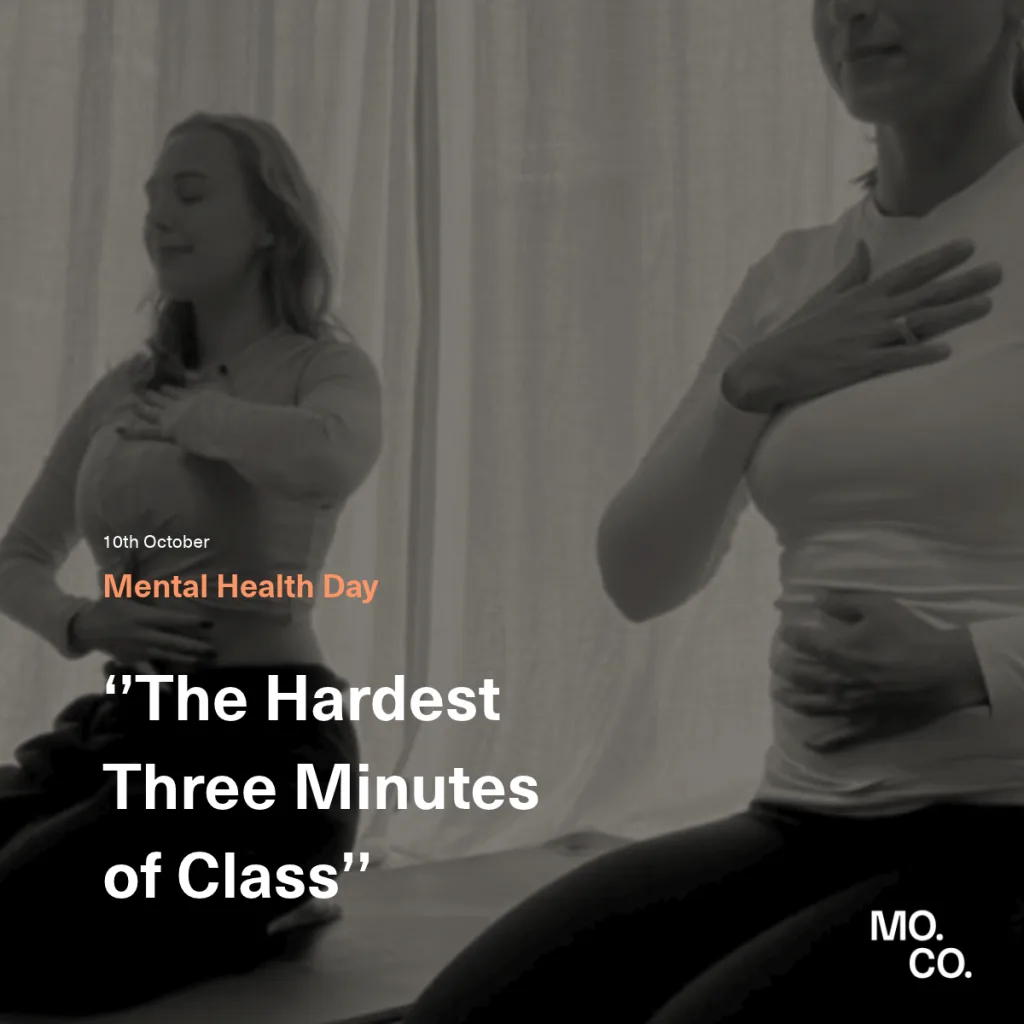
Every class at Mo.Co starts the same way. Before we move, we take about three minutes to lie still and breathe. Just you, the floor and your breath.
For some people it’s the best part of their day. For a lot of others, it’s the hardest three minutes of class. We see it all the time: the fidgeting, the glances at the clock, the toes tapping, the mental to-do list running at full speed. Three minutes of doing nothing can feel like an eternity.
If that sounds like you, this post is for you. You’re busy. You’re capable. You probably train hard, and you’re good at getting things done. You might also find it very, very difficult to stop.
Addicted to doing
You’re not alone. In a now-famous 2014 study, researchers asked people to sit alone in a room with nothing to do but think, for just 6 to 15 minutes. Most didn’t enjoy it. In one version, participants could give themselves a mild electric shock if they wanted to, a shock they’d earlier said they would pay to avoid. Two-thirds of the men and a quarter of the women chose to shock themselves rather than simply sit with their thoughts (Wilson et al., 2014).
And that was in 2014. Since then, our phones have only got better at making sure we never have to sit with nothing. We fill every gap: the queue, the commute, the walk to the kettle. Even our workouts can become another thing to tick off, at full speed.
Here’s the thing: being able to switch off is a skill, not a personality trait. And like any skill, it can be trained.
Yes, intensity works. But it’s not the whole story
Let’s be honest about the research. Exercise is excellent for mental health, and harder exercise tends to bring the biggest improvements. Two of the largest recent reviews, covering hundreds of trials, found that more intense exercise reduced symptoms of depression and anxiety more than gentler exercise (Singh et al., 2023; Noetel et al., 2024). So if your spin class or your 5K gives you a lift, keep going.
But good mental health is more than a mood lift. It’s also about being able to rest, to recover, and to come back down after the high.
Intense exercise is a stressor, and that’s a good thing. It raises cortisol, your main stress hormone, and the harder you go, the bigger the rise: in one study, cortisol barely moved after easy exercise, rose by around 40% at moderate effort and by more than 80% at hard effort (Hill et al., 2008). Cortisol isn’t the enemy. It wakes us up in the morning, fuels us with energy and helps manage inflammation (Cleveland Clinic). The goal is for it to rise when we need it and fall when we don’t.
The problem is that your stress system doesn’t keep separate accounts. A hard workout, a deadline, a bad night’s sleep and a full inbox all add up. If you’re a doer, you’re probably good at the up. The down, the part where your body gets to recover, is often the bit that gets skipped.
Think of it as stress + recovery = balance. We need to practise recovery.
Your breath is the way to begin
So how do you train recovery? You don’t need a retreat or an hour of meditation (although that would be great!). You can start with one breath. And yes, something so small, done often, can make a real impact.
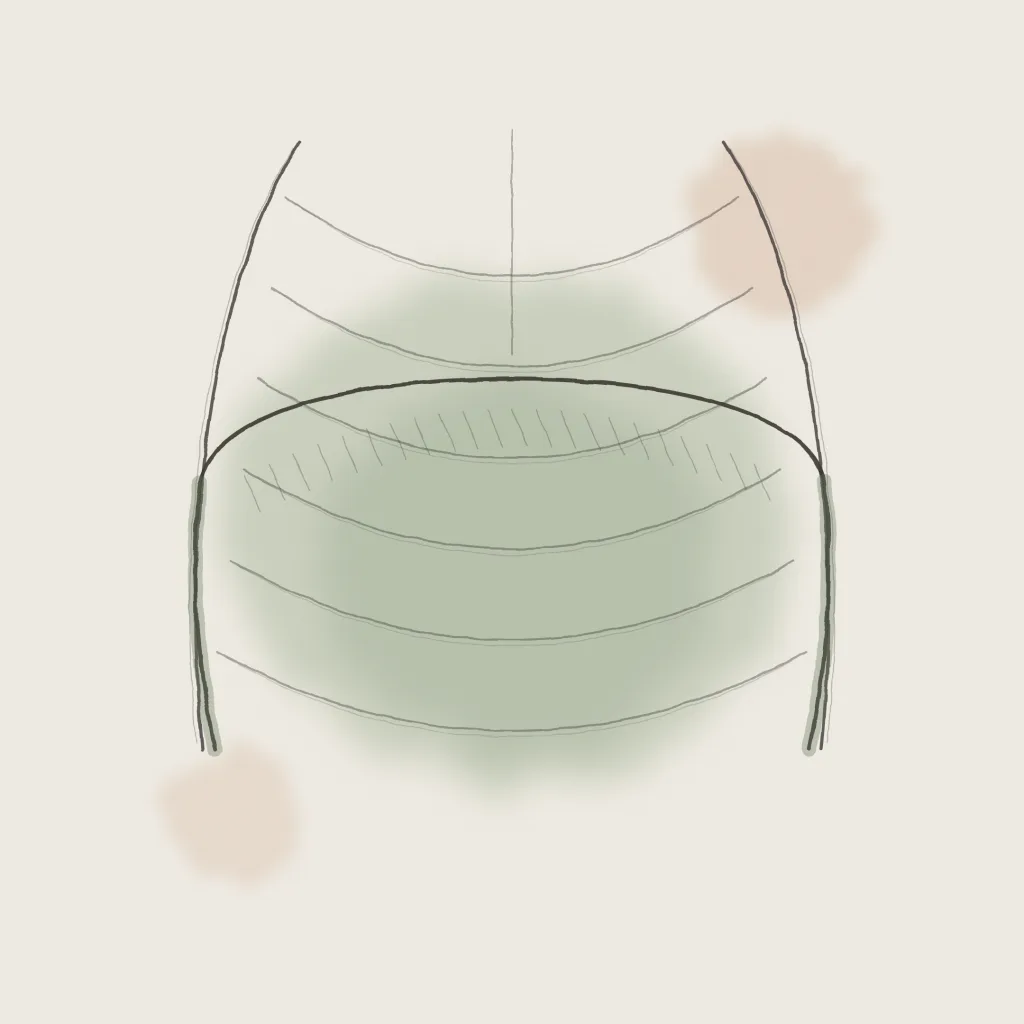
Our breathing usually reflects how we feel. When we’re stressed, it tends to get faster and higher, with the neck, shoulders and upper chest working harder. But it works both ways: slowing the breath down on purpose can help shift the body towards a calmer state. A 2018 review linked slow breathing with greater relaxation and comfort, and also with greater alertness and vigour. Calm, not sleepy (Zaccaro et al., 2018).
The exhale is especially important. In a small 2023 study, five minutes a day of breathing built around long, slow exhales improved mood more than the same time spent in mindfulness meditation (Balban et al., 2023). It’s something we explore in our Functional Breathing workshops: the exhale comes first.
That’s what those three minutes at the start of class are for. Not to make you relax on command, but to give you the chance to arrive.
Your three minutes
Try this at home, at your desk, or before your next workout. Set a timer for three minutes.
1. Notice first. Before changing anything, just observe your breath. Where is it moving? How fast? No judgement.
2. Soften. Unclench your jaw and let your teeth part slightly. Rest your tongue gently on the roof of your mouth. Let your shoulders drop.
3. Lengthen the exhale. Breathe in comfortably through your nose, then breathe out slowly, a little longer than the in-breath, perhaps with a soft “haaa” as if you’re fogging up a mirror.
4. Pause, then let the next breath come in by itself. Try not to pull the air in, just let it come.
When the urge to check your phone or get up arrives (and it will), just notice it. You don’t have to act on it. That moment is the training. If you feel light-headed at any point, simply return to normal breathing. Light-headedness tends to come from overbreathing – it’s likely a sign you’ve tried to change your breathing too quickly. Patience is key.
If three minutes feels impossible, start with one. If one minute feels hard, start with one intentional cycle of steps 1-4. It gets easier.
Want to go deeper? Our Functional Breathing series starts with Vol. 1: Breathing Starts Before the Breath.
A body ready for the big stuff
Here’s the bonus. Slowing down doesn’t just help your mind; it helps you go hard when you want to.
Running, jumping, lifting and sprinting all ask a lot of your joints, your mobility, your control and your breathing. If those foundations aren’t there, intensity tends to find the weak spot. Lots of our clients first come to us after getting injured doing the workouts they love. The most common thing they say: “my workouts are what keep me sane, I have to get back to ______ as quickly as possible.”
That’s where Pilates, stretch, breath and functional movement come in. Not as a replacement for the hard stuff, but as the foundation underneath it: building the strength, mobility, control and body awareness that let you train hard, recover well and keep coming back.
Practices like these ask you to pay attention: to your breath, to how your body is moving, to what you’re doing right now. Three of the six classic Pilates principles (concentration, control and precision) are all about presence. For a busy, scattered mind, one movement, one breath and one moment at a time can be a real relief. It’s no surprise that mind-body practices were among the most helpful forms of exercise for anxiety in that 2023 review (Singh et al., 2023).
Do less, notice more
This World Mental Health Day, we’re not asking you to give up the workouts that give you the buzz. We’re encouraging you to give the other side of the equation your full attention.
Three minutes of stillness. One longer exhale. A class where the goal isn’t to do more, but to notice more. It might feel like the hardest part at first, but that’s often a sign it’s worth practising.
Come and try it with us. We’ll save you a mat. 🧡
If you’re struggling, movement and breathing can support your wellbeing, but they aren’t a substitute for professional help. Please talk to your GP, or reach out to Mind or Samaritans (call 116 123, free, any time).
References
• Wilson TD, et al. (2014). Just think: the challenges of the disengaged mind. Science. Summary
• Singh B, et al. (2023). Effectiveness of physical activity interventions for improving depression, anxiety and distress: an overview of systematic reviews. British Journal of Sports Medicine. Summary
• Noetel M, et al. (2024). Effect of exercise for depression: systematic review and network meta-analysis of randomised controlled trials. BMJ. Summary
• Hill EE, et al. (2008). Exercise and circulating cortisol levels: the intensity threshold effect. Journal of Endocrinological Investigation.
• Cleveland Clinic. Cortisol: what it is, function, symptoms and levels
• Zaccaro A, et al. (2018). How breath-control can change your life: a systematic review on psycho-physiological correlates of slow breathing. Frontiers in Human Neuroscience.
• Balban MY, et al. (2023). Brief structured respiration practices enhance mood and reduce physiological arousal. Cell Reports Medicine.